
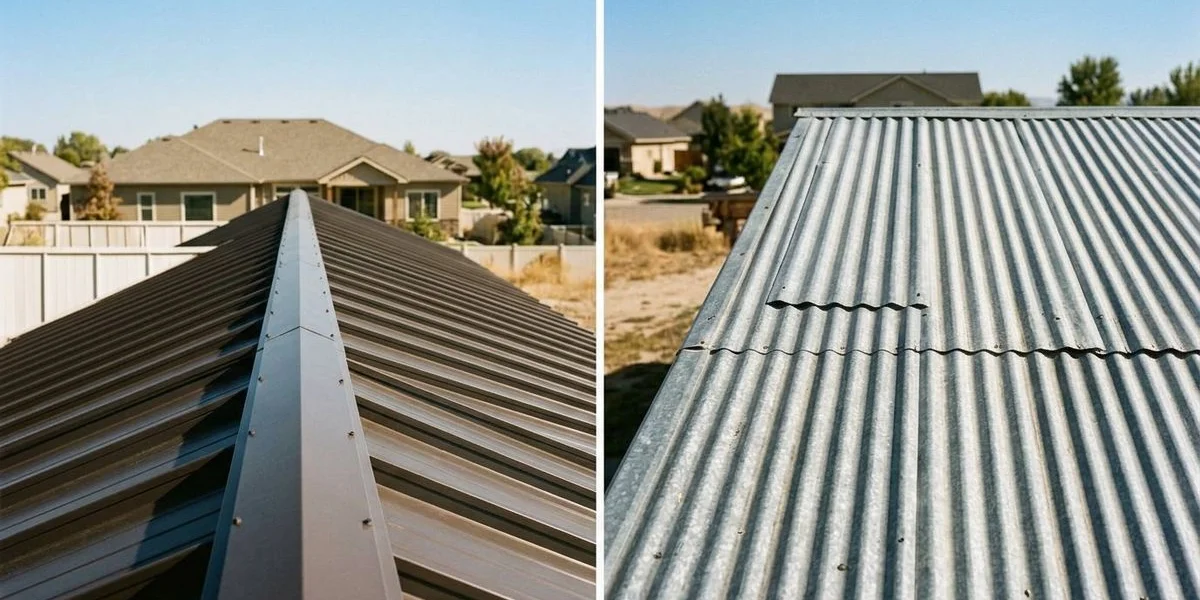
If you’ve decided that a metal roof is the right choice for your Idaho home, the next decision is which system to install. The two most popular residential metal roofing options in the Treasure Valley are standing seam and corrugated panels. While they share the fundamental benefits of metal, the difference lies in how they handle water, wind, and time.
We have installed both types across hundreds of homes in Meridian, Boise, and the surrounding areas. You might be surprised to learn that the “cheaper” option can actually cost more over the life of the roof due to maintenance. Our goal is to give you an honest breakdown so you can make the right choice for your home and budget.
What Is Standing Seam Metal Roofing?
Standing seam roofing features long vertical panels that run from the ridge of the roof down to the eaves. The panels connect through raised seams that interlock together, creating a clean, modern appearance. These systems typically use 24-gauge steel, which is thicker and more resistant to hail dents than standard agricultural panels.
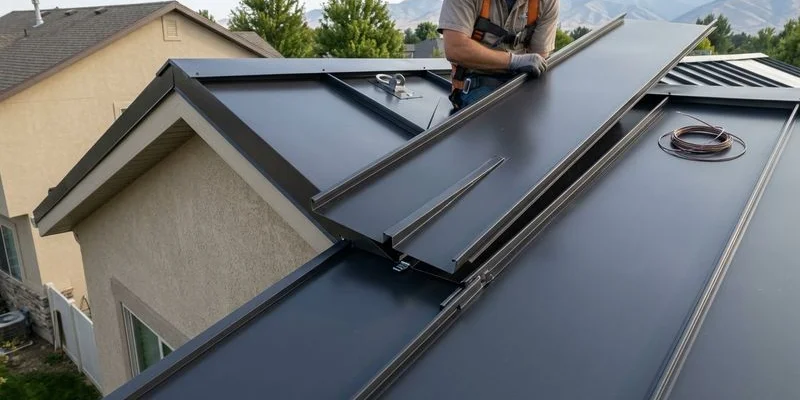
We recommend this system primarily because the fasteners are concealed beneath the seam. Because no penetrations are exposed to the weather, you eliminate the most common leak points found on other roofs. The panels float on clips, allowing the metal to expand and contract with Idaho’s drastic temperature swings without loosening the screws.
The Paint Difference: Kynar 500
Most high-quality standing seam panels feature a PVDF (Kynar 500 or Hylar 5000) paint system. This resin-based coating is chemically designed to resist fading and chalking for over 30 years. If you choose a dark color like Matte Black or Charcoal Gray, this coating ensures it won’t turn a chalky grey after a decade of high-desert sun exposure.
What Is Corrugated Metal Roofing?
Corrugated metal roofing uses panels with a repeating wave or ribbed pattern. The panels overlap at the edges and are secured with exposed fasteners, typically screws with rubber washers that compress against the panel surface to create a seal. This is the classic barn-style metal roofing that has been used for over a century.
We often install these “exposed fastener” systems using 29-gauge steel, which is slightly thinner than standing seam but still durable. Modern corrugated panels have come a long way from the agricultural buildings of the past and are available in many colors. They often rely on SMP (Silicone Modified Polyester) paint systems, which are cost-effective but may fade faster than PVDF coatings.
Head-to-Head Comparison
Appearance and Style
Standing seam delivers a sleek, contemporary look with clean vertical lines. It pairs well with modern, craftsman, and transitional architectural styles common in newer Meridian and Eagle subdivisions. The smooth panel surface and hidden fasteners create an upscale appearance that boosts curb appeal.
Our team suggests adding “striations” or stiffening ribs to the flat part of the standing seam panel. These small ridges help prevent “oil canning,” which is a visible waviness that can appear in flat metal surfaces during hot weather.
Corrugated roofing has a more traditional, agricultural look. It works well on ranch-style homes, farmhouse designs, and rustic mountain cabins. Many homeowners in the rural areas around Kuna, Star, and Caldwell prefer this aesthetic because it complements the landscape.
Durability and Weather Performance
Both options handle Idaho’s weather well, but standing seam has an edge in long-term performance. The concealed fastener system eliminates the most common failure point on corrugated roofs: exposed screws.
We find that the neoprene or EPDM washers on corrugated screws typically last about 10 to 15 years before they dry rot and crack. Once these washers fail, water can seep into the screw holes, leading to leaks and potential wood rot. Standing seam panels also handle snow shedding more efficiently because there are no screw heads to snag the snowpack.
Cost Comparison
This is where corrugated roofing has a clear advantage. In the Treasure Valley market for 2026, typical installed costs break down as follows:
| Feature | Standing Seam | Corrugated (Exposed Fastener) |
|---|---|---|
| Cost per sq ft (Installed) | $12.00 - $19.00 | $5.00 - $9.00 |
| Material Gauge | 24-Gauge (Thicker) | 29-Gauge (Thinner) |
| Paint System | PVDF (Kynar 500) | SMP (Polyester) |
| Wind Rating | High (UL 580 Tested) | Moderate |
| Fastener Maintenance | None | Required every 10-15 years |
Standing seam costs more due to the precision manufacturing of the panels, the more complex installation process, and the specialized tools required. Corrugated panels are simpler to produce and faster to install, which reduces both material and labor costs.
Installation Considerations
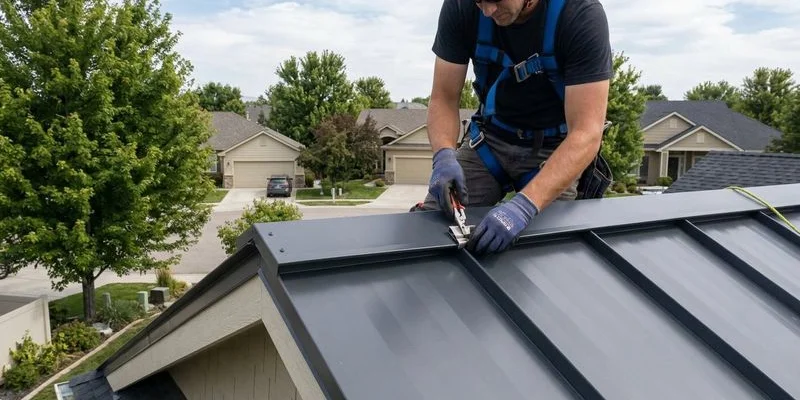
Standing seam installation requires experienced metal roofing specialists. The panels are often formed on-site using a portable roll-forming machine, cut to the exact length of your roof run. This means fewer seams and a custom fit.
We use specialized clips that attach to the roof deck, allowing the panels to slide back and forth as they heat up and cool down. Corrugated panels are pre-cut to standard lengths and installed by overlapping panels and driving screws through the ridges or flats. While it still requires roofing expertise, the skill threshold is slightly lower.
Noise Levels
A common concern with metal roofing is noise during rain and hail. Both types can be louder than asphalt shingles, but standing seam tends to be slightly quieter because the flat panel surface does not amplify sound the way corrugated ridges can.
Our installers always recommend a solid roof deck and a high-quality synthetic underlayment. This combination acts as a sound buffer, reducing rain noise to a gentle tapping that most homeowners find pleasant rather than disruptive.
Which One Should You Choose?
Choose standing seam if:
- You want the longest-lasting, lowest-maintenance option available.
- Your home has a modern or contemporary design.
- You want to avoid screw-tightening maintenance every decade.
- The budget allows for a higher upfront investment for better long-term ROI.
Choose corrugated if:
- You want metal roofing at a more accessible price point.
- Your home has a farmhouse, rustic, or traditional style.
- You are comfortable with periodic fastener maintenance.
- You want a proven, widely available product for a shop or barn.
Get Expert Guidance
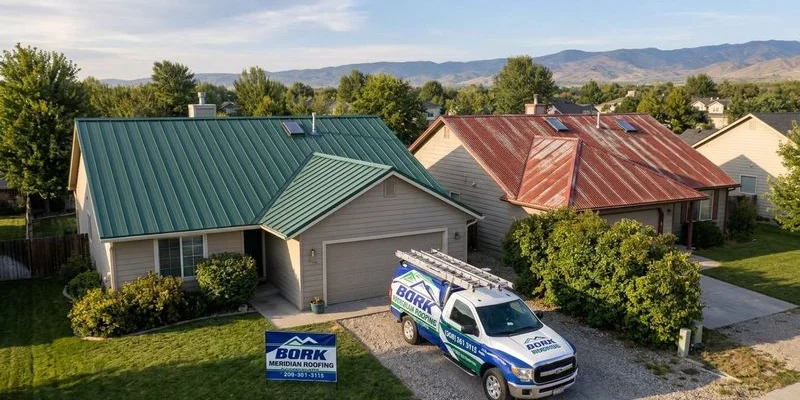
At Bork Roofing, we install both standing seam and corrugated metal roofing systems across the Treasure Valley. During your free estimate, I will assess your roof structure, discuss your aesthetic preferences, and help you choose the option that delivers the best value for your situation. Schedule your free consultation today, or explore our full roof replacement options.
No matter which metal roofing style you prefer, the investment pays for itself through decades of reliable protection against everything Idaho weather throws at your home.