
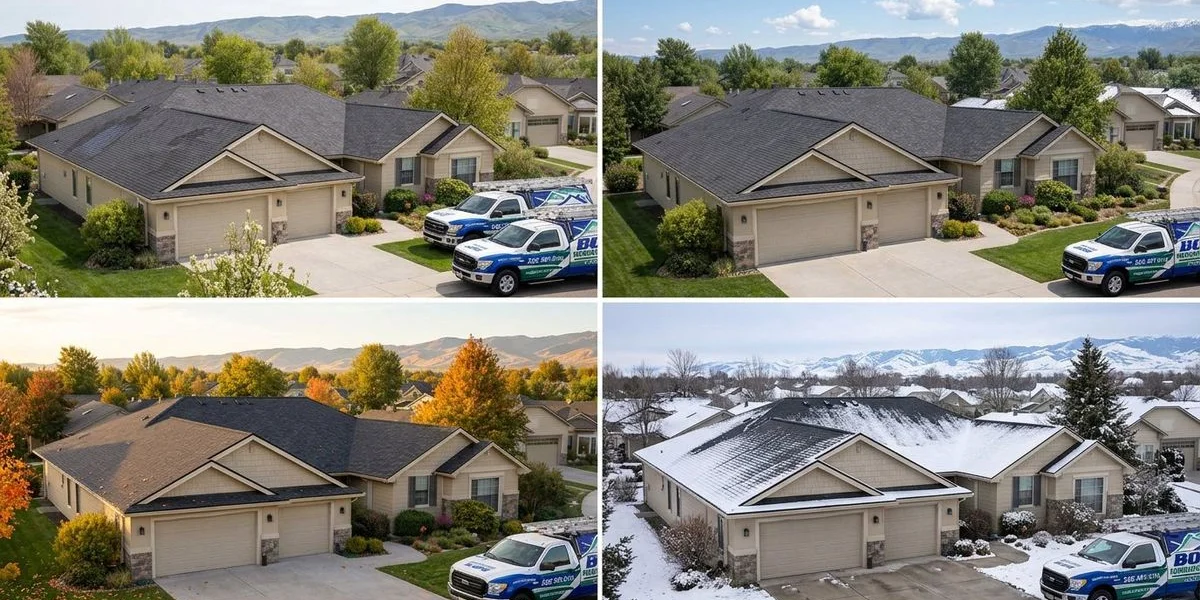
Idaho’s Treasure Valley puts roofs through a brutal spectrum of weather challenges every single year.
We see temperatures swing from scorching triple digits in July to sub-zero freezes in January.
This 100-degree variance causes roofing materials to expand and contract rapidly.
Over time, this thermal shock creates vulnerability.
A proactive maintenance schedule costs far less than emergency repairs.
It helps you avoid the panic of a leak during a storm.
We have found that consistent care can extend your roof’s lifespan by five to ten years.
Here is a Seasonal Roof Maintenance Guide for Idaho Homeowners tailored specifically for properties in Meridian, Boise, Nampa, Eagle, and the surrounding areas.
Spring Maintenance (March Through May)
Spring is the most active season for roof maintenance in Idaho.
The winter freeze-thaw cycles have ended.
Now you must assess the toll taken by heavy snow loads and prepare for the high winds typical of a Treasure Valley spring.
Post-Winter Inspection
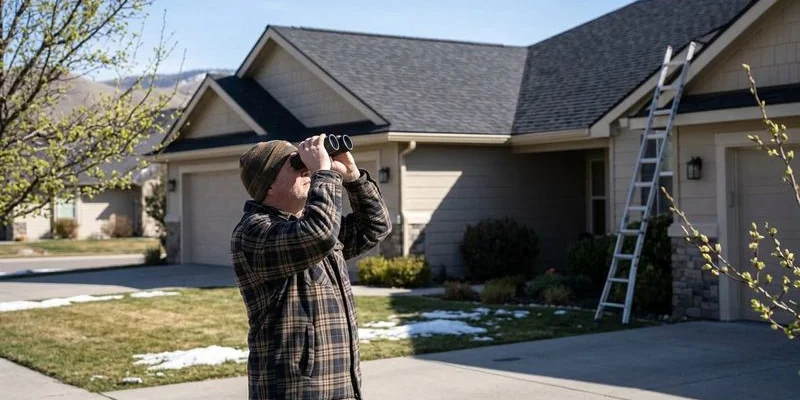
After the last snow melts, we recommend inspecting your roof from the ground using binoculars.
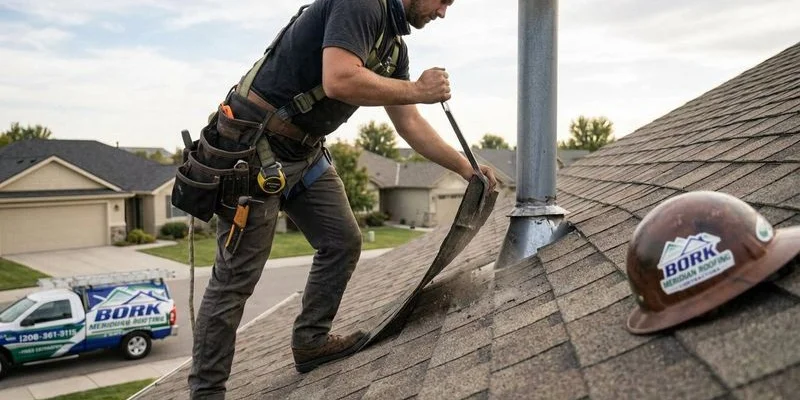
You can also schedule a professional roof inspection for a more thorough assessment.
Our team specifically looks for “thermal splitting” during this time.
This occurs when shingles crack due to rapid temperature changes during cold snaps.
Look for these specific indicators:
- Lifted shingles caused by spring wind gusts, which often exceed 45 mph in Boise.
- Granule loss where protective stones have washed away, leaving the asphalt exposed to UV rays.
- Ice dam aftermath visible as stained soffits or damaged lower roof edges.
- Flashing separation around chimneys where metal contracts faster than brick.
- Soft decking which feels spongy and indicates rotting wood beneath the shingles.
Gutter Cleanup and Flow Test
Spring is critical for gutter maintenance.
Debris creates a heavy sludge that weighs down gutters and pulls them away from the fascia board.
We suggest performing a “flow test” with a garden hose after clearing the muck.
Run water through the system to ensure it drains without leaking at the seams.
Clear all gutters and downspouts to prevent water from backing up under your shingles.
Verify that downspout extensions direct water at least four to six feet away from your foundation.
This distance is necessary to prevent hydrostatic pressure from building up against your basement walls.
Trim Overhanging Branches
Spring growth means tree branches may encroach on your roof line.
Local arborists recommend the “six-foot rule” for roof clearance.
Branches that touch or hang over the roof act like sandpaper on asphalt shingles during wind events.
They also provide a direct bridge for squirrels and roof rats to access your home.
Trim branches back to create a safe perimeter.
Summer Maintenance (June Through August)
Treasure Valley summers are intense and relentless.
Weeks of temperatures above 95 degrees combined with high-altitude UV radiation accelerate shingle aging.
Summer also brings the risk of thermal shock from sudden thunderstorms hitting hot roofs.
Heat and UV Protection
You cannot change the weather, but you can manage how your roof breathes.
We focus heavily on attic ventilation during these months.
Adequate ventilation reduces heat buildup in the attic space.
This lowers the temperature of the roof deck and reduces the baking effect on your shingles.
Check that ridge vents, soffit vents, and any powered ventilators are clear of insulation or bird nests.
Proper airflow can lower attic temperatures from 150°F down to 110°F.
Impact of Attic Ventilation on Home Efficiency
| Feature | Poor Ventilation | Proper Ventilation |
|---|---|---|
| Attic Temp | Can reach 160°F+ | Stays closer to outside temp |
| Shingle Life | Cooked from below (blistering) | Normal aging process |
| AC Workload | Unit runs constantly | Unit cycles normally |
| Moisture | Trapped humidity causes mold | Humidity escapes continually |
Post-Storm Checks
After any significant thunderstorm or hail event, perform a ground-level visual check.
Hail damage in Idaho is often subtle but destructive.
Look for “bruises” on the shingles where granules have been knocked loose.
These spots appear dark and circular.
Check for these signs of impact:
- Fresh granules piling up in gutters or at the base of downspouts.
- Dents on soft metals like box vents, valleys, or gutter downspouts.
- Cracked plastic on skylights or dryer vents.
- Lifted shingles that have broken their sealant strip.
If you suspect damage, contact us for a free inspection.
Idaho insurance policies typically have a one-year statute of limitations for filing storm claims.
Early detection prevents you from paying out of pocket for damage that should be covered.
Check Attic for Leaks
On a hot, sunny day, go into your attic and turn off the lights.
We call this the “daylight test.”
Pinpricks of light visible through the roof boards indicate gaps where water will eventually enter.
Scan the rafters for dark streaks or water stains.
These marks indicate that moisture has penetrated the system, even if it hasn’t reached your ceiling yet.
Fall Maintenance (September Through November)
Fall is your final opportunity to fortify your home before winter arrives.
The weather is mild enough for adhesives to seal properly.
Addressing minor issues now prevents them from becoming major leaks during a January freeze.
Comprehensive Gutter Cleaning
This is the single most important maintenance task for Idaho homeowners.
Leaves from Cottonwoods and Maples clog gutters rapidly in late October.
We see hundreds of ice dams every winter caused directly by neglected fall gutter cleaning.
Clean all gutters and downspouts after the majority of leaves have fallen.
Properties with mature trees near the home often require two separate cleanings in the fall.
Seal and Caulk Check
Inspect every penetration on your roof.
Silicone and tar-based sealants dry out and crack due to our arid climate.
Check the flashing around plumbing vents, chimneys, and skylights.
Reapply roofing-grade polyurethane sealant where needed.
Do this before temperatures drop below 40 degrees.
Most quality sealants require 24 hours of temperatures above 40°F to cure and bond correctly.
Insulation and Ventilation Review
Before winter, verify that your attic insulation meets current standards.
Idaho homes generally require a minimum of R-49 to R-60 attic insulation to meet modern energy codes.
Many older homes in Meridian and Boise have settled insulation that rates far lower.
Proper insulation keeps heat in your living space and keeps the roof deck cold.
A cold roof deck is the best defense against ice dams.
Confirm that insulation baffles are installed at the soffits.
These plastic or foam channels ensure that incoming air is not blocked by insulation.

Winter Maintenance (December Through February)
Winter roof maintenance in Idaho is about monitoring and defensive management.
We advise against major repair work during this time unless you have an active leak.
Asphalt shingles become brittle and can shatter if walked on during freezing temperatures.
Snow Load Monitoring
Most residential roofs in the Treasure Valley are engineered to handle a snow load of 20 to 30 pounds per square foot.
However, wet, heavy snow can exceed this limit during severe winters like the 2017 “Snowmageddon.”
Monitor your roof if snow accumulation exceeds two feet.
Consider professional removal if you see signs of structural stress like bowing ceilings or jamming doors.
Warning: Never climb on your roof to remove snow.
The risk of slipping is incredibly high.
Use a roof rake with a telescoping handle to pull snow down from the safety of the ground.
Ice Dam Prevention
If you followed the fall maintenance steps, your risk is low.
However, you should still watch the eaves during freeze-thaw cycles.
Large icicles are a clear warning sign.
They indicate that heat is escaping your home and melting the snow on your roof.
If ice builds up, avoid using rock salt.
Salt is corrosive to metal flashing and nails.
We recommend using calcium chloride ice melt filled in a nylon stocking.
Lay the stocking across the ice dam perpendicular to the gutter.
This melts a channel through the ice, allowing water to drain safely.
Interior Monitoring
Regularly check ceilings and upper walls for subtle changes.
Look for bubbling paint or faint yellow rings.
Musty odors often appear before visual signs of a leak.
These signs indicate moisture intrusion that requires immediate investigation.
Identifying a leak early allows us to install a temporary tarp or patch to minimize interior damage until a full repair is possible in spring.
Year-Round Maintenance Schedule at a Glance
| Season | Key Tasks |
|---|---|
| Spring | Inspect for wind damage, check for thermal splitting, clean gutters. |
| Summer | Verify attic airflow, inspect after hail storms, check for attic light leaks. |
| Fall | Clear heavy leaf debris, re-seal flashing/vents, upgrade insulation. |
| Winter | Monitor snow depth, mitigate ice dams with calcium chloride, watch for interior stains. |
When to Call a Professional
Many maintenance tasks are manageable for a handy homeowner.
However, certain red flags require the equipment and safety training of a professional.
Contact Bork Roofing if you identify any of the following issues:
- Active leaks or water stains that grow larger after rain.
- Granule loss so severe that the black asphalt mat is visible.
- Sagging roof lines or decking that looks uneven.
- Flashing that has rusted through or detached completely.
- Visible daylight showing through roof boards in the attic.
- Shingles that are curling, cupping, or missing entirely.
Regular professional inspections every two to three years provide a baseline for your roof’s health.
This history helps when filing insurance claims or selling your home.
Learn more about our roof repair services or schedule a comprehensive inspection today.
A little maintenance each season protects the biggest investment in your home.
We have seen how proactive care saves homeowners thousands of dollars in premature replacement costs.
Stay consistent with your checks.
Your roof will reward you with decades of reliable performance.