
One of the most frequent questions we hear from Treasure Valley homeowners is straightforward: how long should my roof last?
It sounds like a simple question, but in our experience, the answer has very little to do with the warranty printed on the shingle wrapper.
The reality is that your roof’s lifespan in Idaho is dictated by the relentless demands of our high-desert climate.
Idaho’s weather is uniquely brutal on roofing materials.
We see intense summer UV radiation that bakes shingles, followed by severe temperature swings where a 100-degree day drops to a 60-degree night.
Then comes the winter mix of heavy snowfall, ice dam conditions, and occasional high winds.
These factors significantly affect how long your roof will last compared to manufacturer estimates, which are often based on mild, controlled environments.
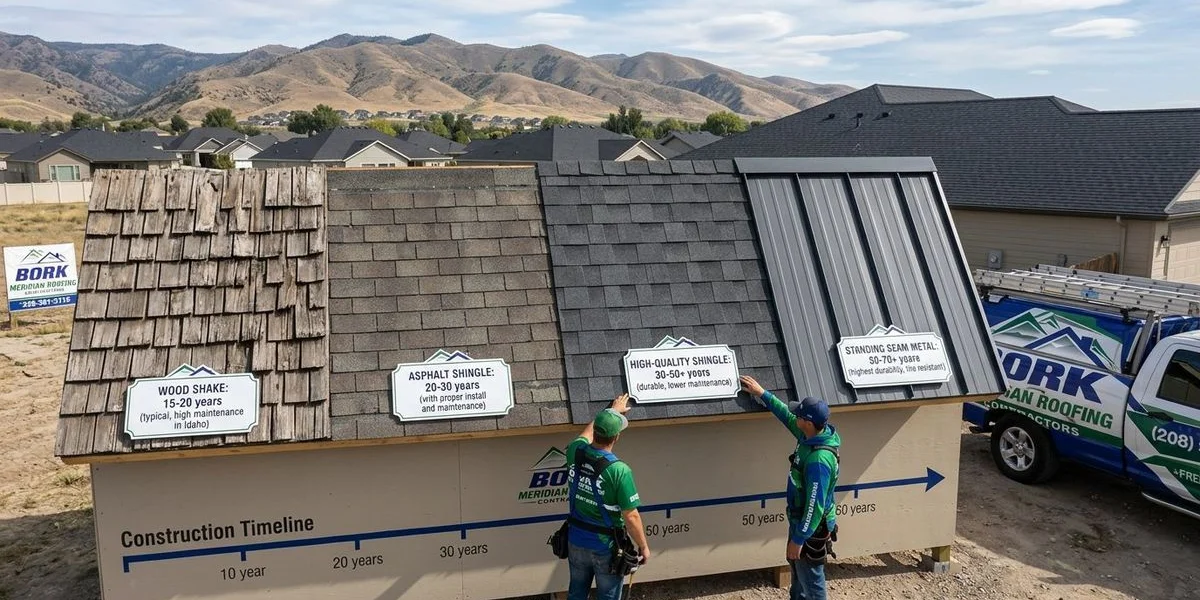
Here is a realistic breakdown of roof lifespan by material type for homes in Meridian, Boise, Eagle, Nampa, and the surrounding Treasure Valley.
Asphalt Shingles: 15 to 25 Years
Asphalt shingles are the most common roofing material in the Treasure Valley, found on roughly 80 percent of residential homes.
We recommend them frequently because they offer a solid balance of affordability and performance.
However, the “30-year” label you see on the package is a warranty term, not a life expectancy promise for Idaho.
Our intense UV exposure dries out the oils in asphalt faster than in other regions, making the shingles brittle over time.
Three-Tab Shingles: 15 to 20 Years
Three-tab shingles are the entry-level option you often see on older homes or budget-conscious builds.
They are a single-layer shingle with a flat, two-dimensional appearance.
While manufacturers may warranty them for 20 to 25 years, we find that Idaho’s wind and thermal shock limit their functional life to 15 to 20 years.
They are rated for lower wind speeds (typically 60 mph), which can be a liability during those fierce spring gusts we get in the valley.
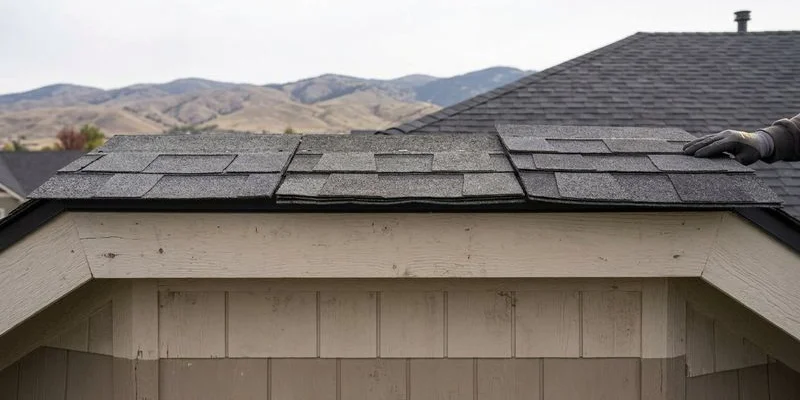
Architectural (Dimensional) Shingles: 20 to 25 Years
Architectural shingles feature a dual-layer construction that adds thickness and depth.
This extra density provides better resistance to wind uplift—often rated up to 130 mph—and improved impact resistance against hail.
In Idaho conditions, you can expect 20 to 25 years of reliable service from a quality architectural shingle.
The key to reaching that 25-year mark is almost always proper intake and exhaust ventilation to keep the shingles cool.
Premium/Luxury Shingles: 25 to 30 Years
Premium shingles from brands like CertainTeed, GAF, and Owens Corning are designed to mimic the look of slate or shake.
These top-tier products use a heavier base mat and extra-thick asphalt layers to resist cracking.
We often see these roofs reach the 25 to 30-year mark in Idaho, provided they are installed with a complete weather-barrier system.
Metal Roofing: 40 to 70 Years
Metal roofing has the longest expected lifespan of any commonly installed residential material in the Treasure Valley.
Its durability here is exceptional because metal is immune to the UV degradation that kills asphalt.
It also handles thermal cycling—the expansion and contraction from hot days and cold nights—without cracking or becoming brittle.
Standing Seam Metal: 50 to 70 Years
Standing seam panels with concealed fasteners are the gold standard for longevity.
Because the fasteners are hidden beneath the panels, they aren’t exposed to the weather and won’t back out over time.
The factory-applied PVDF (Kynar) finishes resist fading and chalking for 30 to 40 years.
Even after the finish fades, the underlying steel continues to protect the structure for decades longer.
Corrugated Metal: 40 to 50 Years
Corrugated panels with exposed fasteners are a more cost-effective metal option.
The trade-off is that the rubber washers on the thousands of exposed screws will eventually dry out and crack in the Idaho sun.
You should plan on inspecting and potentially replacing these fasteners every 15 to 20 years to maintain a watertight seal.
While the panels themselves last half a century, the maintenance requirement is higher than standing seam.
Metal Shingles: 40 to 60 Years
Metal shingles are stamped to look like slate, wood shake, or tile.
They offer the same material benefits as panel roofing but with a more traditional aesthetic.
One specific advantage we notice is that small damages are easier to repair on a metal shingle roof than on a long standing seam panel.
Concrete and Clay Tile: 40 to 60 Years
Tile roofing is less common in the Treasure Valley than in warmer climates like Arizona.
You will see it on homes with Mediterranean or Southwestern architectural styles, but it requires specific structural considerations.
Your roof trusses must be engineered to support the massive weight of tile, which can exceed 800 pounds per square.
Concrete Tile: 40 to 50 Years
Concrete tiles are incredibly tough and fire-resistant.
However, Idaho’s freeze-thaw cycle is their Achilles’ heel.
Water can seep into the porous concrete, freeze overnight, and expand, causing micro-cracks that grow over time.
While the tile itself is durable, the underlayment (the waterproof layer underneath) often fails before the tiles do, usually around the 25 to 30-year mark.
Clay Tile: 50 to 60 Years
Clay tile is denser and less porous than concrete, making it naturally more resistant to water absorption.
The main risk for clay in Idaho is impact damage from hail or falling branches.
Sourcing replacement tiles for a 30-year-old clay roof can be difficult and expensive.
Just like with concrete, you will likely need to perform a “lift and relay” procedure after 30 years to replace the worn-out underlayment underneath.
Flat Roofing: 15 to 30 Years
Flat and low-slope roofs face a unique challenge in Idaho: standing water and sitting snow.
Unlike steep roofs that shed water instantly, flat roofs rely entirely on their waterproof membranes.
TPO and PVC Membranes: 20 to 30 Years
Single-ply thermoplastic membranes like TPO and PVC are heat-welded at the seams.
This creates a monolithic waterproof surface that is excellent for preventing leaks in standing water conditions.
In our climate, a 60-mil TPO or PVC membrane typically lasts 20 to 30 years.
PVC is generally more resistant to chemical damage and stays more flexible in extreme cold than TPO.
EPDM (Rubber) Membranes: 20 to 25 Years
EPDM rubber roofing is like a heavy-duty inner tube for your roof.
It handles Idaho’s temperature extremes well because of its inherent flexibility.
The weak point is the seams, which are glued rather than heat-welded.
We find that the adhesive tends to break down after 15 to 20 years, requiring repairs to prevent leaks.
Built-Up Roofing (BUR): 15 to 25 Years
Traditional built-up roofs use multiple layers of asphalt and reinforcing fabric.
These systems are tough but are becoming less common due to their weight and reliance on asphalt.
In Idaho, the thermal stress of hot summers and cold winters can cause the asphalt layers to crack after 15 to 25 years.
Factors That Shorten Roof Life in Idaho
Understanding what accelerates deterioration helps you protect your investment.
These are the specific local enemies of your roof’s lifespan.
Poor Ventilation
Inadequate attic ventilation is the single biggest lifespan killer for roofs in Idaho.
Building code typically requires a 1:300 ratio of ventilation, but most manufacturers recommend a 1:150 ratio for our climate.
In summer, trapped heat bakes shingles from the underside, cooking the oils out of the asphalt.
In winter, that same trapped heat melts snow on the roof, which then refreezes at the eaves to form damaging ice dams.
Hail Damage Left Unrepaired
The Treasure Valley isn’t “Tornado Alley,” but we do get significant hail events, like the storms that hit near Boise in July 2025.
Even moderate hail can bruise shingles and dislodge the protective granules.
When this damage is ignored, the sun attacks the exposed asphalt, leading to leaks within a few years.
If you suspect hail damage, get a professional inspection promptly and file an insurance claim within the one-year window most policies allow.
Deferred Maintenance
Small problems become expensive disasters very quickly.
A lifted shingle that allows water underneath can rot your plywood decking in a single wet season.
We also see many issues start with clogged gutters, which force water to back up under the shingles during winter freezes.
Addressing these issues promptly is far cheaper than replacing water-damaged insulation and drywall.
Improper Installation
Even the most expensive materials will fail if they aren’t installed to handle Idaho weather.
Common shortcuts include high-nailing shingles (which reduces wind resistance) or skipping the ice and water shield at the eaves.
Local code requires an ice barrier extending 24 inches inside the exterior wall line to prevent leaks from ice dams.
This is why choosing a qualified, licensed roofing contractor who knows local codes is critical.
Roof Lifespan Summary for Idaho
| Material | Expected Life in Idaho | Cost Indicator (2026) | Key Vulnerability |
|---|---|---|---|
| Three-Tab Shingles | 15 - 20 years | $ | High wind, UV aging |
| Architectural Shingles | 20 - 25 years | $$ | Thermal shock |
| Premium Shingles | 25 - 30 years | $$$ | UV, extreme hail |
| Standing Seam Metal | 50 - 70 years | $$$$$ | Cosmetic denting |
| Corrugated Metal | 40 - 50 years | $$$$ | Fastener washer failure |
| Concrete Tile | 40 - 50 years | $$$$ | Freeze-thaw cracking |
| Clay Tile | 50 - 60 years | $$$$$ | Impact cracking |
| TPO/PVC | 20 - 30 years | $$$ | Seam stress |
| EPDM | 20 - 25 years | $$$ | Seam adhesive failure |
How to Know When Your Roof Is Nearing the End
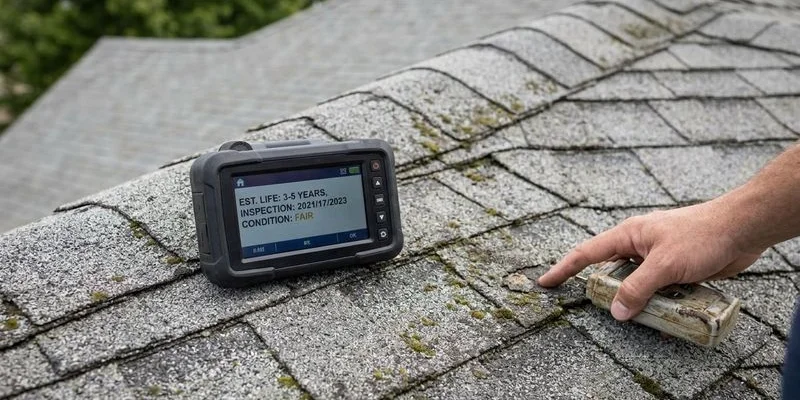
If your roof is approaching the ages listed above, it is time to pay close attention.
Schedule a professional roof inspection to get an expert baseline of its condition.
You can also look for early warning signs yourself.
Check for excessive granules in your downspouts, which look like black sand and indicate your shingles are losing their armor.
Look for shingles that are curling at the edges or entire sections that look “shiny” where the granules have worn off.
At Bork Roofing, we believe in giving you the plain facts about your roof.
We will provide an honest assessment of whether you can get a few more years out of it or if you should start budgeting for a replacement.
Contact us today for a free inspection and let’s make sure your home is ready for the next Idaho winter.
Knowing your roof’s expected lifespan helps you plan financially and avoid the panic of an emergency leak.
Regular maintenance and prompt repairs are the best way to get every possible year out of your investment.